The smell of food cooking over an open fire, live music by the Black Sea and strangers joining hands in a traditional dance – Bulgaria is telling its story in perhaps one of the most universal languages of all: food.
The national festival “The Flavours of Bulgaria” has begun its journey across the country, bringing together regional cuisine, local traditions and the people who continue to preserve them. It is co-organized by the Balkan Media Association, with support from Bulgaria’s Ministry of Tourism and Ministry of Culture, as well as local authorities in the participating cities.
The Silk Way team joined the festival for its first two stops – Burgas and Pomorie – where two days offered two very different atmospheres, but the same glimpse into Bulgarian culture.
Where the journey began
The festival opened at the Sea Station in Burgas, with the Black Sea providing a natural backdrop to a celebration built around Bulgarian food.
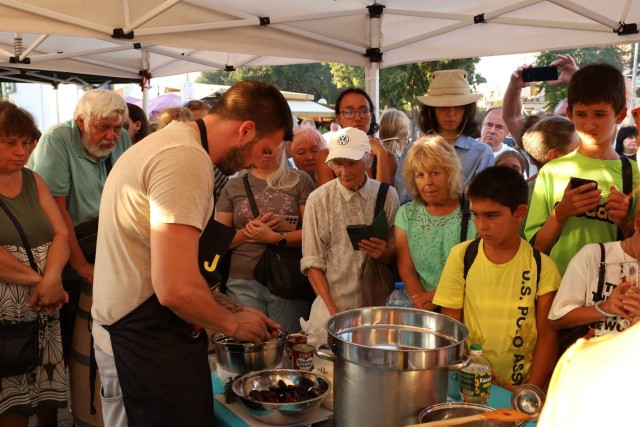
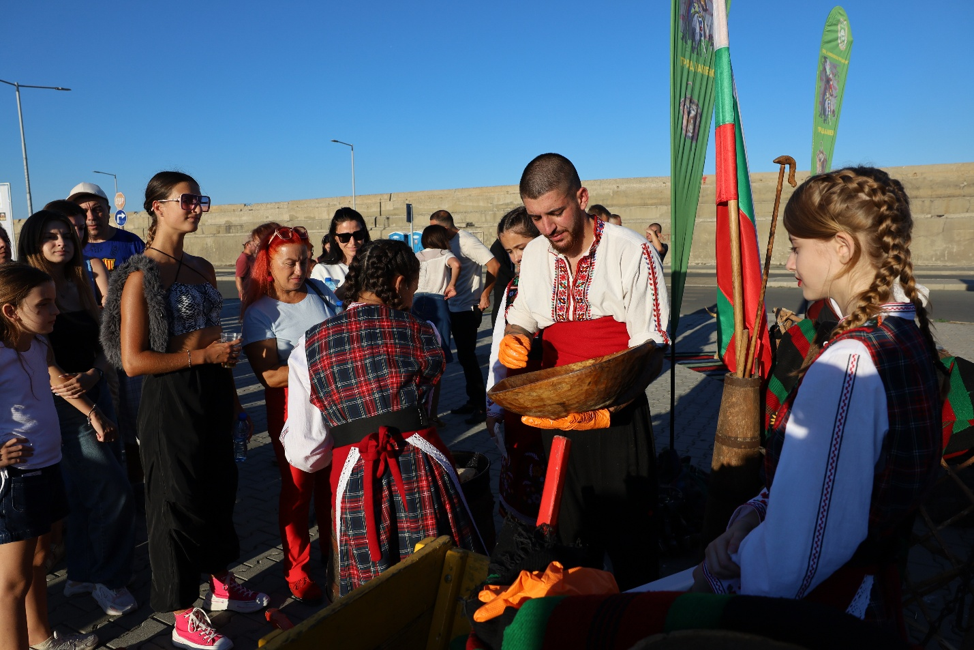
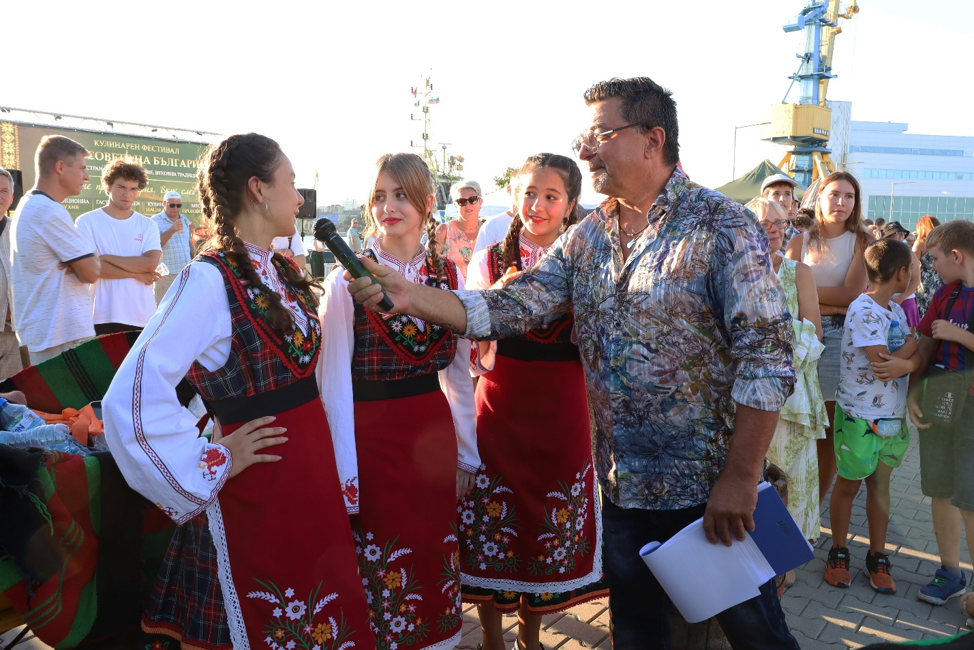
Across the festival grounds, visitors moved from one tent to another, watching dishes being prepared, tasting local products and discovering recipes associated with different parts of the country.
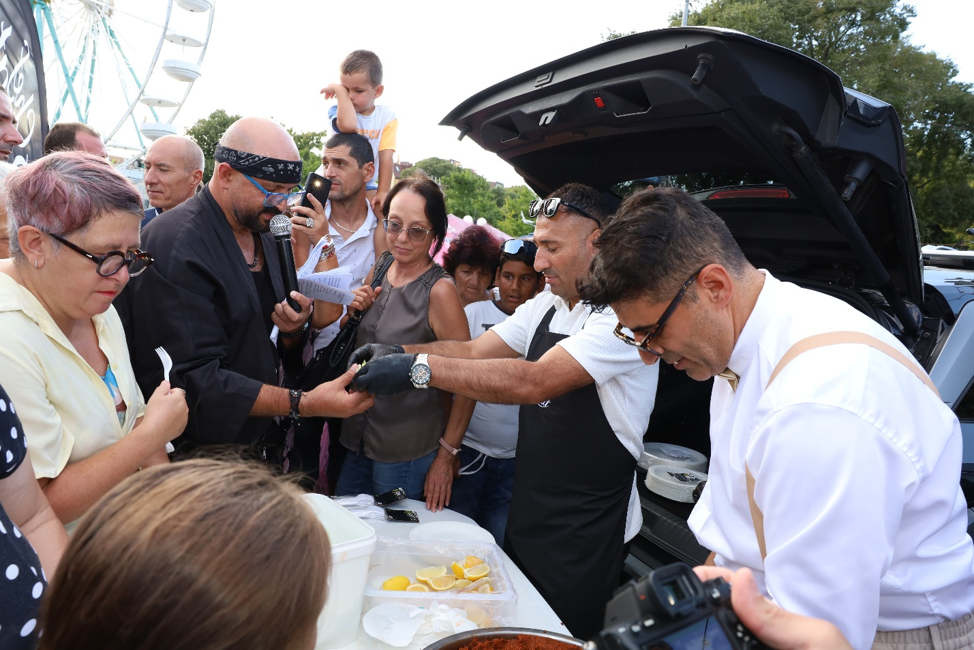
Some were interpretations of Bulgarian cuisine by contemporary chefs. The culinary programme featured familiar faces from “Hell’s Kitchen Bulgaria”, with chefs preparing dishes live and offering their own take on local flavours. Their cooking stations quickly became some of the busiest spots at the festival, as locals gathered to taste the food and take photos with their favourite chefs that they would usually see on TV.
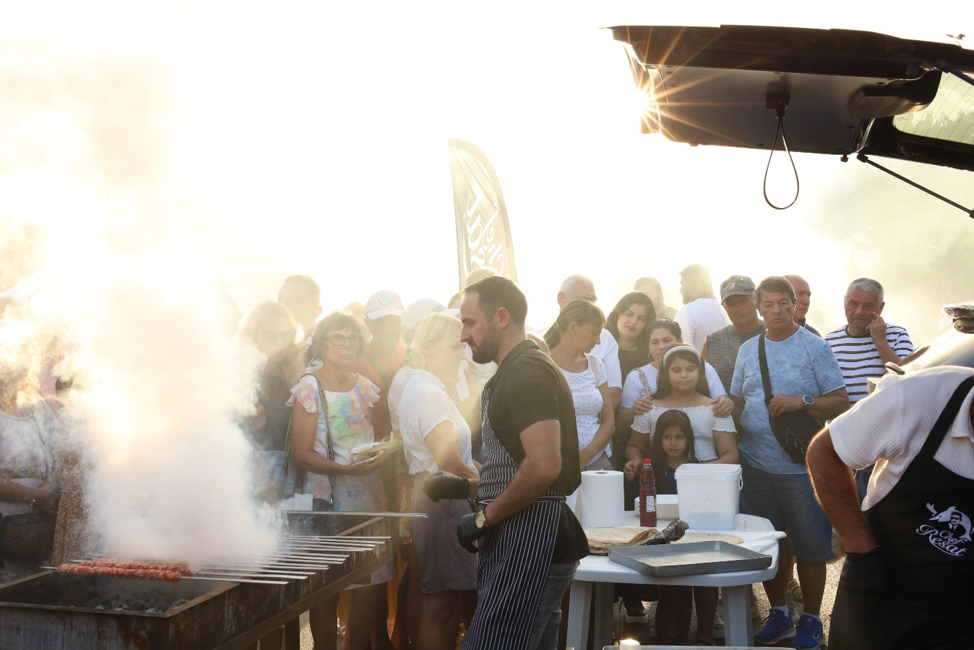
Traditional cooking techniques were demonstrated alongside recipes that have survived largely because families and local communities continued passing them from one generation to the next. Bread and katmi – traditional Bulgarian pancakes – were among the foods prepared using techniques involving firewood and hot sand.
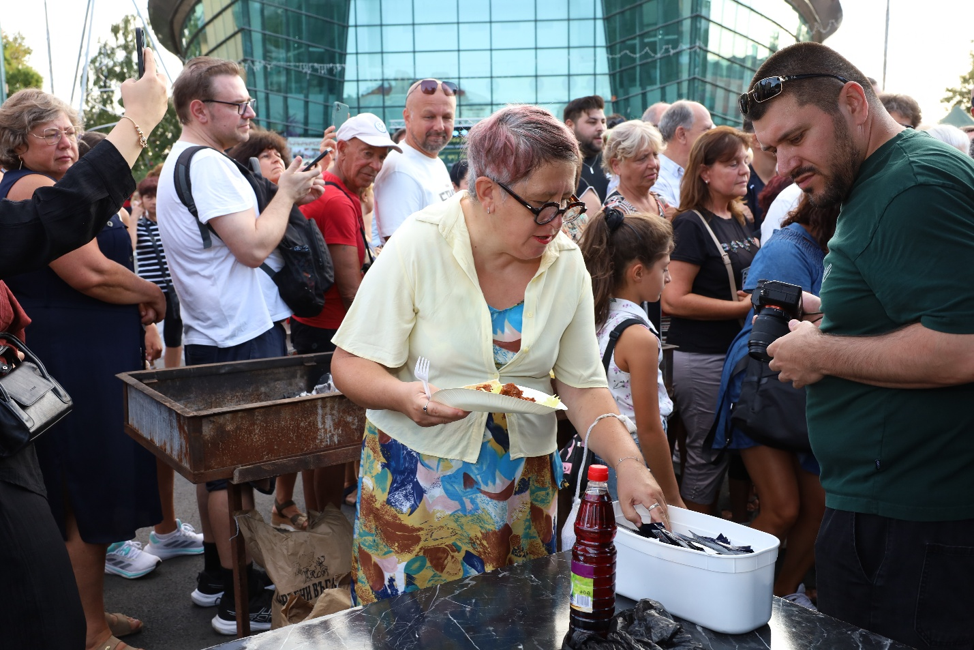
But the festival was never designed as simply a place to eat. Its broader idea is to use gastronomy as a way of travelling through Bulgaria – connecting a dish with the region it comes from, the people who make it and the history behind it. In Burgas, that concept came alive naturally: people gathered around the cooking stations, stopped to ask questions, listened to music and, of course, tasted what was coming off the fire.
There was little distance between those presenting Bulgarian traditions and those who had come to discover them. That interaction became part of the experience itself.
From a festival to a town celebration
A day later, the journey continued along the Black Sea coast to Pomorie. This time, the atmosphere was different.
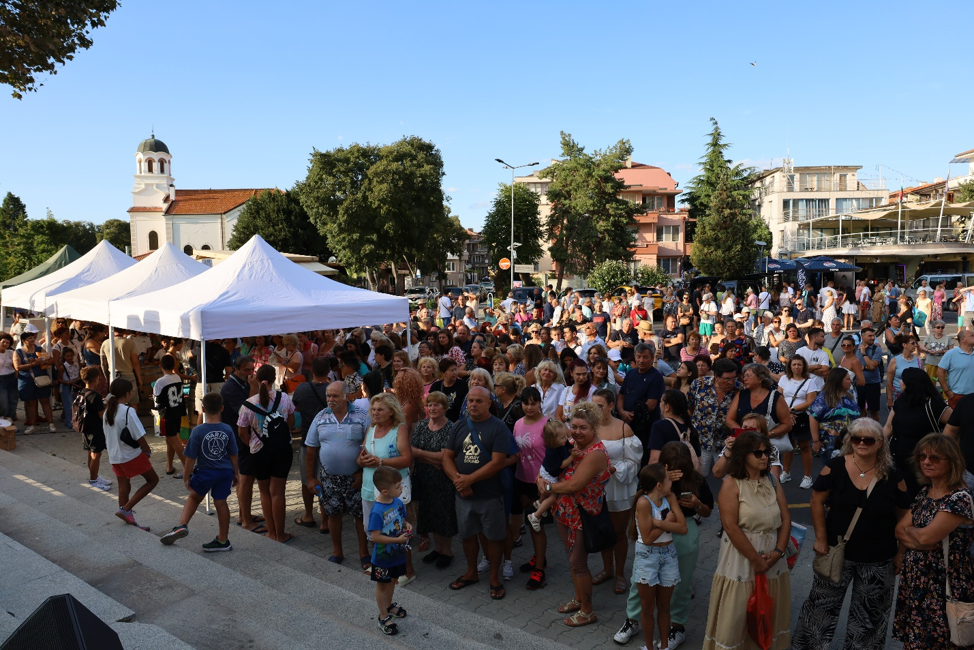
The festival arrived in the town on September 6, Bulgaria’s Unification Day, an official holiday commemorating the 1885 unification of the Principality of Bulgaria and Eastern Rumelia. Against that backdrop, “The Flavours of Bulgaria” became part of something larger.
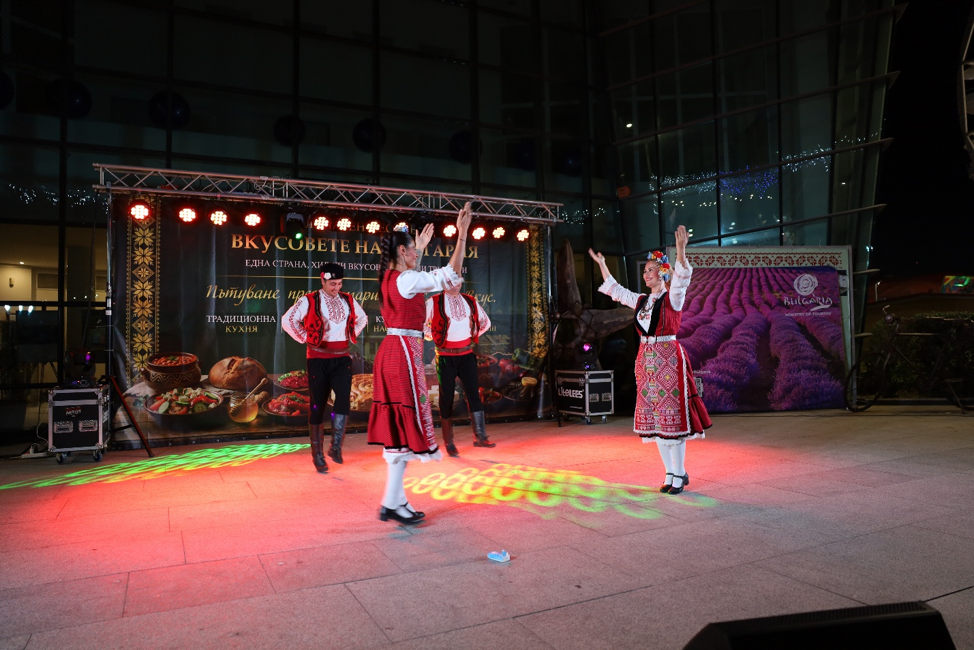
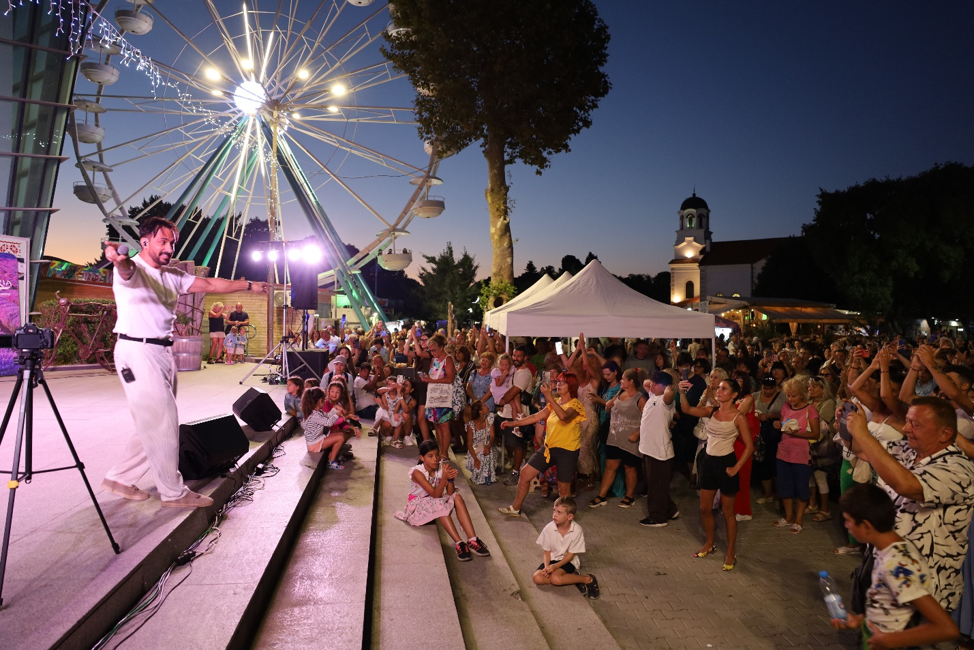
What began around food gradually turned into a celebration across the square. Music drew people closer to the stage. Families stopped to watch. Then people began to dance.
Soon, circles formed as locals joined traditional Bulgarian horo dances, with more people stepping in as the music continued. Some clearly knew every movement; others simply followed the person next to them. For visitors, there was no need for much explanation – the square itself told the story.
Food, music and dance blended into the wider celebrations of the national holiday, turning the festival’s second stop into a particularly vivid display of local life.
And that perhaps captured the idea behind the project better than any formal presentation could.
Telling the story of a country through its food
“The Flavours of Bulgaria” was created to promote gastronomic tourism while drawing attention to the culinary and cultural traditions of the country’s different regions.
The concept is simple: Bulgarian cuisine is not one single menu. Recipes, ingredients and methods of preparation change as the festival moves from the coast to the mountains, from larger cities to smaller communities.
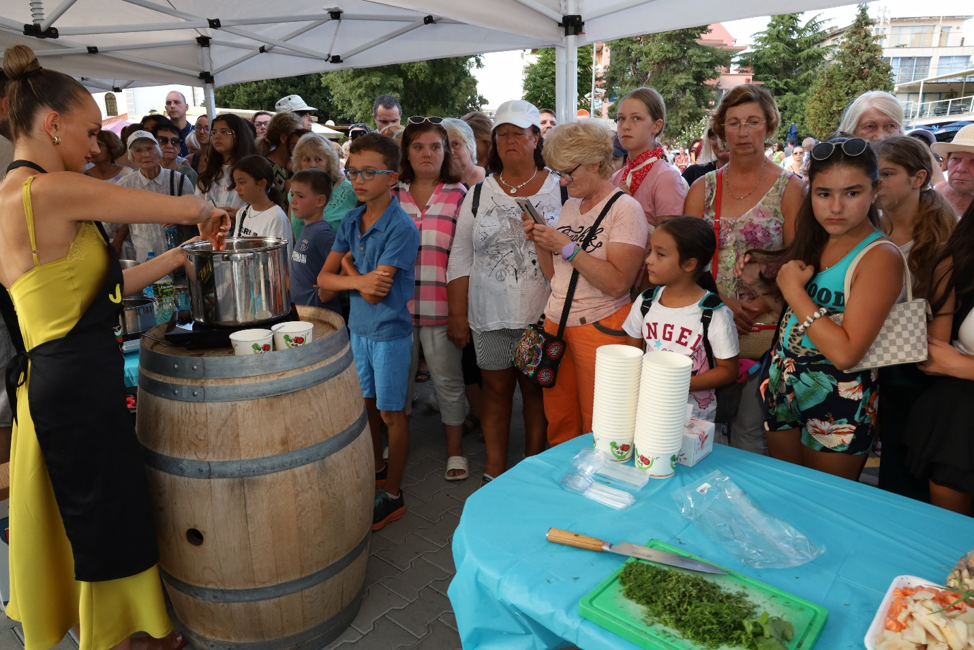
The project also puts an emphasis on traditions that can easily disappear if they are no longer practiced. Some recipes have never depended on cookbooks. They have survived in homes and communities, taught by one generation to another.
Bringing them into a public space gives visitors an opportunity not only to taste the finished dish, but to meet the people keeping that knowledge alive.
The festival also included international culinary elements, reflecting another part of its message – that food can serve as a meeting point between cultures. International journalists, including our team representing Kazakhstan, attended the opening events as the organizers seek to take the story of Bulgarian gastronomy beyond the country’s borders.
The journey continues
Burgas and Pomorie were only the beginning. After starting on the Black Sea coast, “The Flavours of Bulgaria” is travelling further across the country, with stops in towns and communities including Pirdop, Troyan, Svoge, Devin, Chavdar, Mirkovo, Stara Zagora, Breznik and Kostinbrod.
Each destination brings its own local recipes, traditions and stories to the programme. And after two days on the road with the festival, one thing became clear: gastronomic tourism is not only about finding something new to eat. It is about understanding why people cook it in the first place.
Author: Yergali Ramazanuly

Related Articles