Scientists from Kazakhstan and other Central Asian countries will be able to quickly exchange data and environmental research findings, as well as monitor climate change. A new digital platform will make this possible. The concept for a pilot climate platform for the countries of the region was presented in Astana. The platform will also help identify potential investors and attract funding for environmental projects. Astana Hub and international scientific organizations are expected to be involved in its development.
«Through our platform, we propose showcasing advanced digital technologies to reduce methane emissions across all sectors of the economy, promote the development of biofuels, and demonstrate ways to improve emissions monitoring. We have already prepared two pilot projects as part of this platform. The first is a project by the Kunayev Institute of Mining, focused on improving emissions monitoring in the mining sector. The second project is being presented by Sagda-Ai, a joint Canadian-Kazakh company. It focuses on a Kazakh project involving biofuel production technologies for carbon farming,» noted Bakhyt Yessekina, Director of Scientific Research and Education Center «Green Academy».
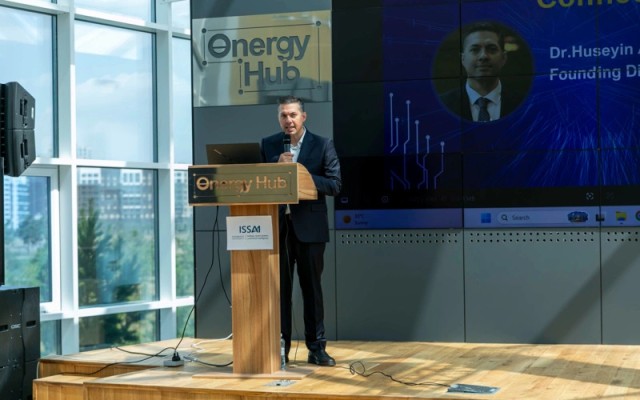
Science and new technologies were the main topics of an international conference held at the Presidential Center in Astana. Scientists and experts from Central Asian countries discussed climate change, scientific research, and solutions for the region’s sustainable development. The conference was held to mark World Science Day.
«Addressing these issues requires, first and foremost, joint efforts and scientific cooperation across the entire region. Secondly, it requires evidence-based solutions, as we understand that every decision must be backed by solid evidence. UNESCO is also actively promoting cooperation, as I have often noted, along with scientific collaboration and, of course, the principles of ethical use of modern technologies,» noted Maxat Baibekov, Head of Social and Human Sciences Programme, UNESCO Regional Office in Almaty.

Related Articles