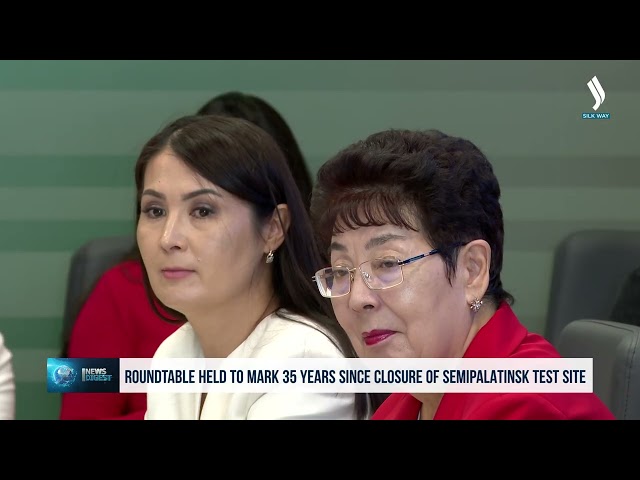
35 years without nuclear testing. On August 29, 1991, Kazakhstan closed the Semipalatinsk nuclear test site and subsequently voluntarily renounced its nuclear arsenal. This decision strengthened the country’s international standing in the field of nuclear disarmament and non-proliferation. Two years later, Kazakhstan joined the Treaty on the Non-Proliferation of Nuclear Weapons (NPT) and, in 1996, became one of the first countries to sign the Comprehensive Nuclear-Test-Ban Treaty (CTBT). Together with other countries in the region, Kazakhstan also signed a treaty establishing the Central Asian Nuclear-Weapon-Free Zone (CANWFZ). The historic significance of that decision extended far beyond the country. In 2009, at Kazakhstan’s initiative, the UN General Assembly declared August 29 the International Day against Nuclear Tests. Today, Kazakhstan continues to promote the strengthening of the global nuclear non-proliferation regime while advancing the peaceful uses of nuclear energy. This path was discussed by roundtable participants in Astana. Experts emphasized the importance of further promoting Kazakhstan’s peacekeeping experience.
«We
renounced nuclear weapons. At the time, it was the world’s third- or
fourth-largest nuclear arsenal, but nevertheless, a decision was made to
renounce nuclear weapons and pursue a purely peaceful path. Kazakhstan is, in
fact, one of the leaders of this movement. For example, Kazakhstan was one of
the first countries to sign and ratify the Treaty on the Prohibition of Nuclear
Weapons. In other words, Kazakhstan’s standing and authority are well known,» noted Timur Zhantikin,
Deputy Chairman, Kazakhstan Atomic Energy Agency.

Related Articles