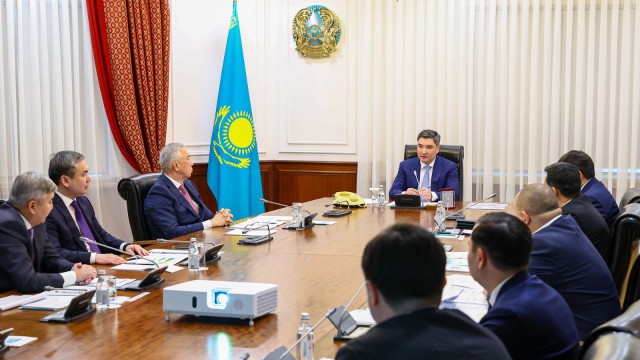
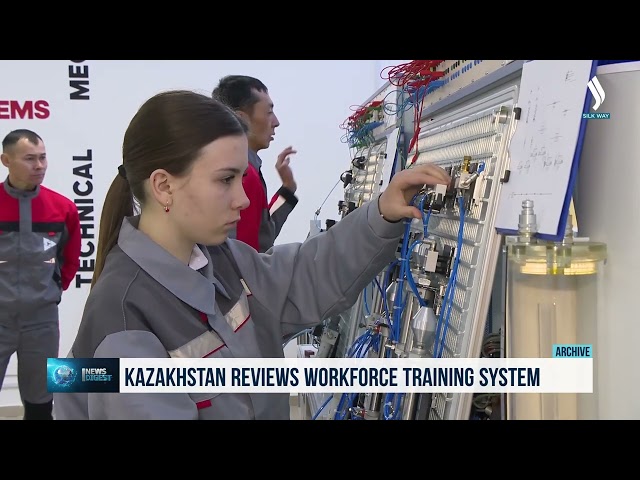
Kazakhstan will establish a national centre for the transformation of professions as the country reviews its education programs to meet the needs of a technology-driven economy. This year alone, more than 3,000 programs covering 160 specialties have been updated. New approaches to vocational training were discussed at a Government meeting in Astana. The issue is particularly relevant for Kazakhstan. According to forecasts, the country’s economy will need around 3 million specialists by 2035, with skilled trades accounting for nearly two-thirds of that demand, or 1.8 million workers.
«As part of the Roadmap for the transformation of technical and vocational education for 2025-2027, comprehensive measures are being implemented to modernize the sector. Micro-qualifications and additional Minor programs are being introduced into educational curricula. All programs will also include a Minor on the use of artificial intelligence tools in professional activities. The programs of 27 vocational education institutions have already been assessed for compliance with international industry standards, with 30 more set to undergo the assessment by the end of 2027. A Register of Educational Programs has also been launched on Career Enbek, the digital platform of the National Qualifications System,» noted Kazakh Minister of Education Zhuldyz Suleimenova.
The Government has issued a number of instructions. Each region is to establish sector-specific clusters for the training and independent certification of specialists in priority industries. This will help align the education system with the actual needs of the labor market. Data on the types and number of jobs at enterprises, based on analysis and forecasts, should be regularly updated and posted on the Enbek.kz information system. According to Prime Minister Olzhas Bektenov, a key priority is to overhaul the existing workforce training system in line with digitalization and the development of artificial intelligence.
«The Head of State constantly emphasizes that
every sector of the economy needs specialists
of a new type who are capable of increasing labor productivity through the use
of modern technologies. Particular attention should be paid to blue-collar
occupations. Under current conditions, a specialist in any production facility
must professionally operate digital management systems and apply new
technologies and AI tools to solve practical tasks. It is precisely for these
purposes that the current workforce
training system needs to be restructured,» said Kazakh Prime Minister Olzhas Bektenov.

Related Articles