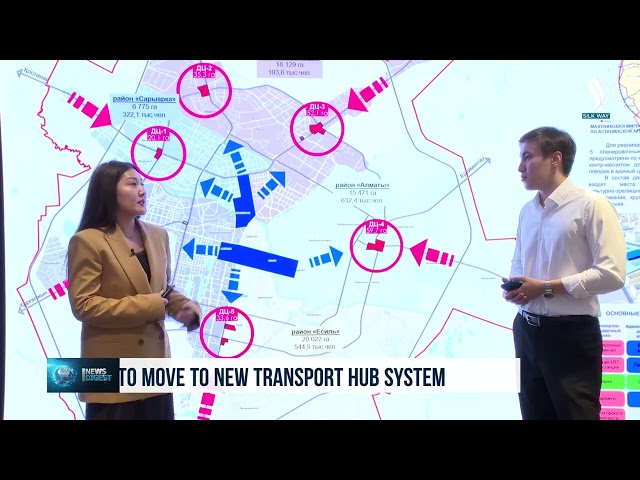
Astana is set to undergo a new phase of development.
The capital’s Master Plan through 2035 has been approved. The document outlines
where new residential areas, roads, schools, hospitals, public spaces, and
transport infrastructure will be developed. The need for new solutions is
driven by population growth. According to forecasts, Astana’s population will
reach 2.3 million by 2035, with nearly 60% of residents being of working age.
This means hundreds of thousands of daily trips across the city. Transport
interchanges will become major transport hubs, where passengers will be able to
transfer from buses to the LRT, commuter trains, or taxis. Bicycle and
e-scooter rental points will also be provided. In the first phase, six hubs
will be created, with one in each district.
«This concept is widely used in developed countries.
There are Park and Ride facilities and transport interchanges, with some people
travelling by rail, while others use bus lanes, buses, or taxis. If we further
develop the LRT system, taking transport interchanges into account, it will
make travel much more convenient. People will be able to leave their cars, take
the LRT, and continue their journey to the city centre,» said Guldana Abish, chief specialist architect at the
Astanagenplan Research and Design Institute.
More than 3 million passengers have travelled on the
LRT since its launch. A second light rail line to the city of Kosshy is
currently under construction and is expected to be completed by the end of next
year. At the same time, geological surveys have begun for another line. This is
one of the first stages in preparing for LRT construction. The exact locations
of transport interchanges along the new lines will be determined during the
design stage. However, experts are already stressing their importance. As
experience from major cities around the world shows, these hubs can serve as a
catalyst for developing new districts.
«We need to develop the three main ring roads and
complete the city’s major arterial roads. We also need to gradually develop
transport interchanges at the city entrances, where passenger traffic is high,»
Abish added.

Related Articles