Kazakhstan has identified priorities for the development of its critical materials sector. The country aims to move beyond raw material extraction towards high-tech processing. To strengthen Kazakhstan’s position in global production chains, a National Laboratory for Critical Materials will be established in Astana. It will assess the potential of the country’s raw material base of rare and rare-earth metals and identify prospects for developing new production facilities. The work will focus on four areas: the production of battery materials, recycling, the production of materials for jet engine components and the semiconductor industry, and the formation of a full production cycle for permanent magnets. These products are in demand in the automotive and aviation industries, as well as in alternative energy.
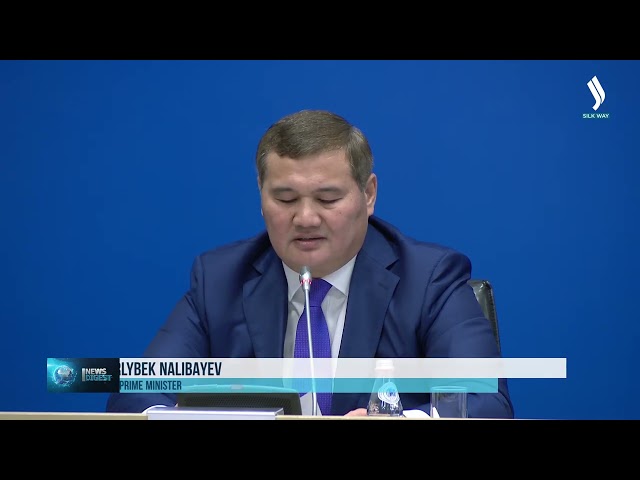
«A pool of projects involving foreign investment has already been formed. German company Bergbau AG, the Korea Institute of Geoscience and Mineral Resources, Australian company Lindian Resources Limited and other international organizations are involved in their implementation,» noted Kazakh First Deputy Prime Minister Nurlybek Nalibayev.
The development of critical materials production requires an expansion of the resource base. To this end, Kazakhstan is stepping up the study of subsoil and introducing advanced prospecting methods. For the first time, state geological mapping at a scale of 1:50,000 has been launched. Over the next three years, 20 projects will be implemented across an area of 100,000 square kilometres. Artificial intelligence, satellite imagery and unmanned aerial vehicles are being used to identify previously undiscovered mineral deposits. Initial results have revealed potential at seven sites, which are expected to be put up for auction next year. At the same time, Kazakhstan is developing a Unified Subsoil Use Platform. It will bring geological data together in one place and enable the identification of new promising deposits.

Related Articles