In the forthcoming multi-volume academic edition on the history of Kazakhstan, a separate volume will be devoted to the Golden Horde era for the first time. This was announced on social media by Vice President of Kazakhstan Erlan Karin. He also touched upon his meeting with Marie Favereau, the author of the book The Golden Horde, which is now available in Kazakh. The book was presented in Astana. It is the result of 20 years of research. The historian conducted research at the Sorbonne, Leiden University, and the University of Oxford, as well as at the French Institute of Oriental Archaeology in Cairo. Marie Favereau studied sources in various languages and her research resulted in the book. It was previously published in English and French. The initiative to publish the book in Kazakh came from renowned publisher Raisa Kader.
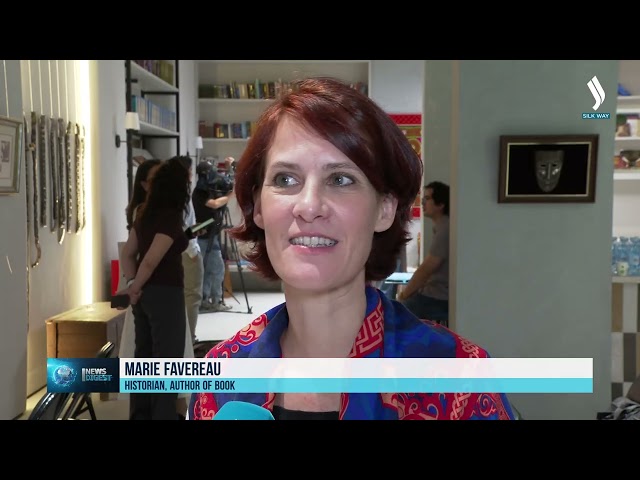
«This is more important that it’s being translated now into the Kazakh language because it touches upon Kazakh history. So there is an interesting connection between the history of Ulus Jochi, as we call the Golden Horde, and Kazakhstan because it’s a steppe. Of course it’s about the nomads, but it’s also about openness, openness to cities, because there were cities in the Golden Horde. And they were also very open to what is multicultural, multi-religious. It’s a very integrative society,» noted Marie Favereau, historian, author of the book.
«As the author notes, the research draws on a wide range of sources. Trade links between the regions played an important role. It was thanks to trade routes, including the Great Silk Road, that many documentary records were preserved in the states connected by these routes and passed down to the present day. Another important source is diplomatic correspondence. The period of the Golden Horde marked a significant milestone in the history of diplomacy. The khans of the Ulus of Jochi regularly sent extensive letters to Europe and Italy, many of which have survived to this day,» said Raisa Kader, Steppe and World Publishing Founder.

Related Articles