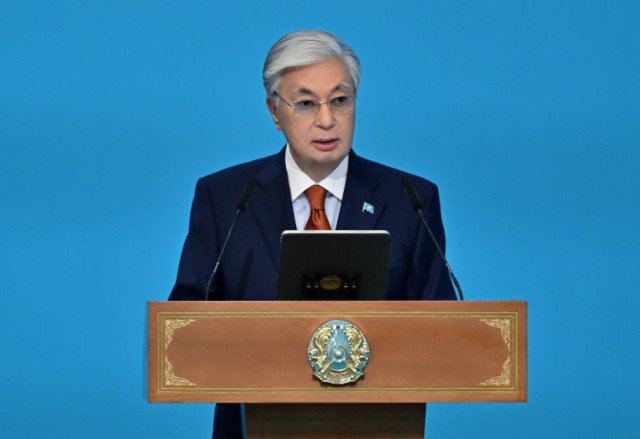

The new political reform concerning the transition to a unicameral Parliament, the Kurultai, was first announced by President Kassym-Jomart Tokayev in his state-of-the-nation-address in 2025. A month later, on October 8, a working group on parliamentary reform was established by order of the Head of State. It included representatives of political parties, lawyers, and public figures. Discussions on the new reform continued for about six months. During this period, the working group reviewed more than 2,000 proposals submitted by citizens through e-Otinish and eGov. All of them were taken into account in developing the new model of the legislative body. The Kurultai will consist of 145 deputies, while the number of its standing committees will not exceed eight. As foreign experts note, a unicameral system is most common in unitary states, whereas a bicameral system is more often used in federations and is based on a system of checks and balances.
«Again, the work of George Tsebelis, that when there are too many veto players, partisan veto players or institutional veto players that can stick their nose into the lawmaking process, the result usually is that we end up producing more low-quality legislation and we fail to produce more high-quality legislation. So, actually, there is an inverse or negative relationship between the number of institutional veto players and the quality of legislation,» noted Riccardo Pelizzo, political scientist, Professor at the Graduate School of Public Policy, Nazarbayev University.

Related Articles