
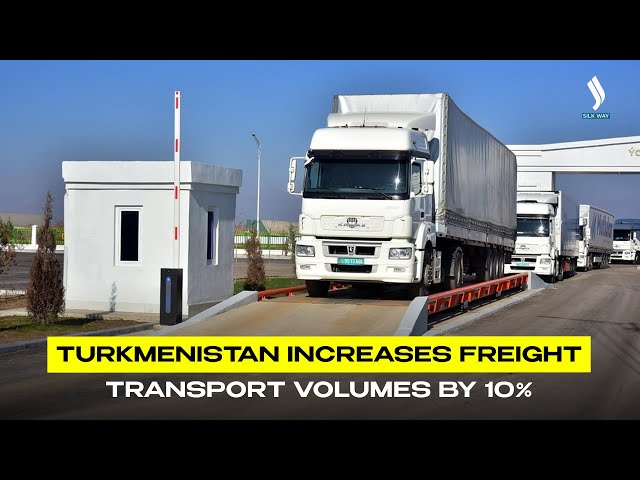
Central Asian countries are expanding their transit
potential. Turkmenistan is one of them. In the first six months of this year,
more than 10.5 million tonnes of cargo passed through the country’s checkpoints
along international transport corridors. This is 10% more than in the same
period in 2025. The growth is being driven by large-scale infrastructure
projects being implemented across the country. These include the
Ashgabat–Turkmenabat high-speed highway, which stretches for nearly 600
kilometers. It connects the capital with the country’s eastern regions,
providing access to the border with Uzbekistan and the Turkmenbashi
International Seaport. Thanks to the new highway, cargo delivery times have
been reduced from several days to 12–15 hours. Modern infrastructure and the
digitalization of logistics have also made transportation faster and more
efficient.
«At present, the
digitalization of documentation is an important aspect for improving efficiency
in the workplace. The transition to electronic document management helps speed
up customs procedures, which is particularly important for international
corridors. Electronic programs and databases are also widely used in the
customs sector across Turkmenistan,» noted Mekan Yovbasarov, specialist at the Ministry of Automobile Transport of Turkmenistan.
Another important project is the development of transport
links with Kazakhstan. A new road bridge over the Garabogazköl Bay will become
part of an international route between the two countries. Its capacity is
expected to increase nearly sevenfold, while travel time will be cut in half.
Turkmenistan plans to export mineral fertilizers and petroleum products along this route. In
addition, metal, machinery, flour, and grain will be transported in transit from Russia and Kazakhstan to
Iran and India.
«The bridge allows heavy
goods vehicles to travel directly to the Kazakhstan border without taking a
major detour. With a load capacity of up to 50 tonnes, the bridge is designed
to accommodate heavy-duty trucks, opening the way for mass transit from Europe
and Russia to Iran and India. Multimodality is another advantage: the highway links up with the Turkmenbashi
International Seaport, turning Turkmenistan into an effective transshipment
point between land and sea routes,» said Ruslan Byashimov, economist at the Ministry of Automobile Transport of Turkmenistan.
Turkmenistan is paying particular attention to the
development of its railway network. The country is modernizing its
infrastructure, upgrading its locomotive fleet, and strengthening the
international North–South and East–West transport corridors. The Turkmenbashi
International Seaport plays an important role in the unified logistics system. Its container terminal
can handle up to 400,000 containers a year, ensuring the rapid delivery of
cargo between Asia and Europe. At the same time, the country is expanding its maritime
fleet. The Gadamly dry cargo vessel has been put into service, along with the
new Dostluk oil tanker.

Related Articles