Kazakhstan is strengthening its position in the global
food market as the country shifts from exporting raw materials to supplying finished
products. Processed products now account for more than half of Kazakhstan’s
agricultural exports, with their share exceeding 51% last year. Overall
agricultural exports rose by 37% to $7 billion. The trend has also been noted
by international analysts. A publication in World Financial Review describes
Kazakhstan not only as a major grain exporter but also as a promising agri-food hub and global center for food security.
Kazakhstan already holds a strong position in international markets for several
agricultural products.
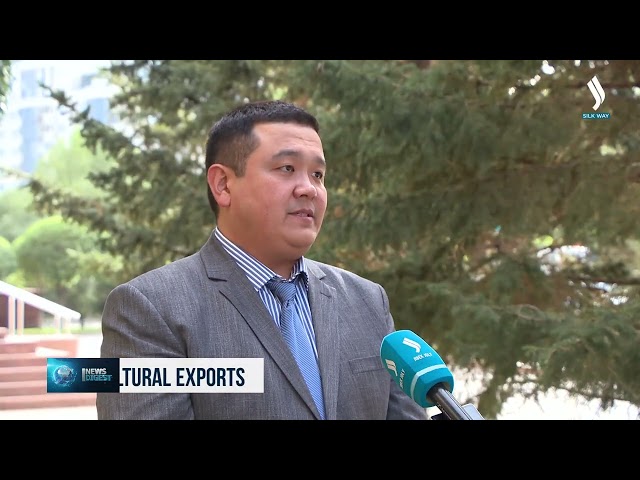
«Kazakhstan is already a major global player in the production and export of agricultural and processed food products. In the Chinese market, the country ranks among the top three suppliers of sunflower oil. It ranks second in flax exports and is also among the top ten exporters of barley and several other agricultural products. Overall, Kazakhstan has already established itself as one of the world’s leading agricultural producers,» noted Serzhan Sharipov, Director of the Department of Agro-Food Markets and Agricultural Processing, Kazakh Ministry of Agriculture.
Meanwhile, Kazakhstan plans to launch 16 new agribusiness
projects by the end of the year, half of them involving agricultural processing
plants. A total of 420 billion tenge will be allocated for their
implementation. The new facilities will be established across ten regions of
the country, with investors from Switzerland, Australia, South Korea, the U.S., Canada, the UAE,
Cyprus, and Türkiye. A
full-cycle meat processing complex will open in Astana, while gelatin and
collagen production will be launched in Almaty. Four projects will be
implemented in the Almaty region, one of which will involve the processing and
storage of fruit and vegetables. Tomato paste production will be launched in
the Kyzylorda region, while the Kostanai region will focus on producing goods
from legumes.

Related Articles