
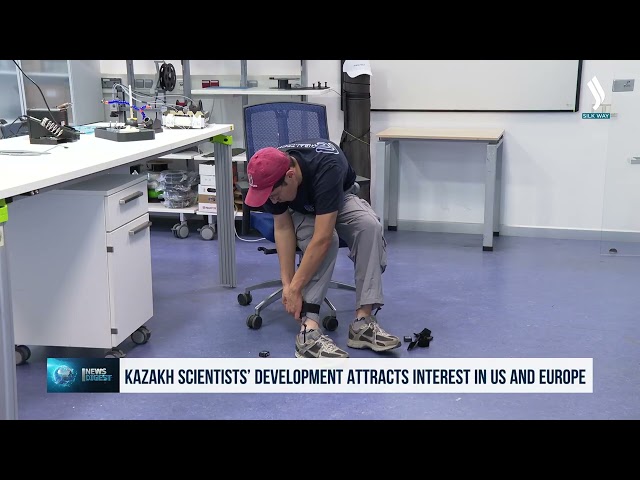
Smart
insoles made in Kazakhstan are gaining popularity abroad. The
deep-tech startup developed by Mirai Tech has attracted interest in the
Netherlands and the U.S., where local sports clubs are testing the technology.
If successful, the project is expected to expand into Germany, the UK, and other European markets. Foreign specialists have
praised the technology’s high level of accuracy. They say the system can detect
even the slightest changes, describing its level of detail in biomechanical
analysis as unique. Ahead of the product launch, a large anonymized database was
compiled. Trials were carried out at several clinics and sports centers in
Astana, where the movement patterns of people with different types of gait,
both with and without injuries, were analyzed.
«The key goal we are working toward is predicting
injuries. Football clubs, major sports clubs, and leagues spend a great deal of
money on athletes, making them highly valuable assets. When an athlete gets
injured, that asset loses value. What we want to do is prevent that from
happening. We can see how you land on your heel, how you land on your toe, and
how you place pressure on your toes. We can capture all this information,
including how much force you apply, and turn it into meaningful analytics and
insights that we then provide to our clients,» CTO of the startup
Abylaikhan Yergesh noted.
Thus, the technology analyzes gait in real time and transmits the data to doctors or coaches via a smartphone. This helps monitor load, track recovery, detect asymmetry, reduce the risk of injuries, improve training efficiency, and support rehabilitation. The developers emphasize that the insoles are manufactured entirely in-house. All components, including the electronic modules, are produced according to their own designs and specifications.
«The sensors we use are unlike any others currently available in the world, so we are breaking new ground in this respect. I also believe our team is a key part of what sets us apart. We have one shared idea and one common goal, and we are constantly developing. It’s not just about how you collect the data, but what you do with that data afterward. That is built directly into our product. As for the thickness of the insole, it’s actually very thin. You don’t even feel that it’s there or notice any difference from your regular insole. At the same time, you can collect a lot of data from it,» Abylaikhan Yergesh added.
According
to the developers, the smart insoles could be used not only in sports but also
in healthcare and, in the future, in the insurance sector. To this end, the
team plans to expand their capabilities.

Related Articles