Kazakhstan could
become a promising hub for the development of carbon capture, utilization and
storage technologies, supported by the country’s geological potential and
well-developed oil and gas sector. CCUS technology captures carbon dioxide from
industrial facilities and prevents it from entering the atmosphere. The
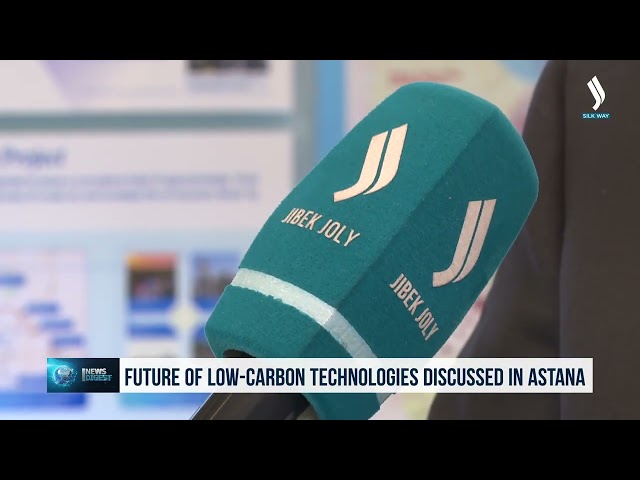
prospects for its deployment were discussed at an international conference in
Astana, which brought together scientists, industry representatives, and
government officials from China, the United Kingdom, Germany, the Netherlands,
Kazakhstan, the United States, and Canada. Discussions focused on technological
solutions, industry regulation, and international cooperation. Experts say CCUS
is particularly relevant for Kazakhstan given the significant role of
conventional energy in the country’s energy mix and its goal of achieving
carbon neutrality by 2060.
«The
reuse of carbon dioxide in our underground formations is being studied. At present,
most oil companies in Kazakhstan use water for injection into the formations to
replace the extracted oil. However, this technology has applications beyond
underground injection and is of broader interest to Kazakhstan, as carbon
dioxide can also be used in the production, in the industry. The most costly
and challenging part is capturing and collecting the carbon dioxide,
transporting it to a designated location, and then processing it. This is why
we need to develop the necessary expertise,» said Saken Kalkamanov, Chairman of the Board of the NJSC «International
Green Technologies and Investment Projects Center».
Well, I think
Kazakhstan can become a player because it’s got the opportunity with its
geology. It has itself an interest in reducing emissions, and some of the
processes that are used in industry rely upon fossil fuels. So, capturing is an
opportunity. You can’t substitute in many of these cases,» said John Loughhead, Fellow of the Royal Academy of Engineering,
University of Birmingham.

Related Articles