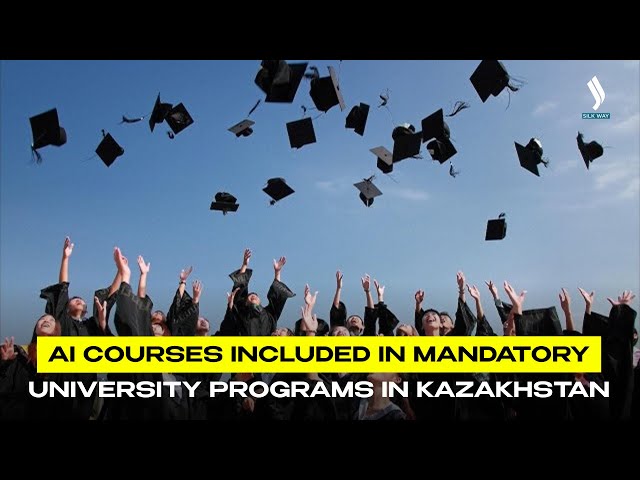
Artificial intelligence has become a compulsory part
of university education across Kazakhstan. Amendments to the state educational
standards came into force two weeks ago. Students will now be taught not only
how to use AI services, but also how they work, as well as how to uphold
academic integrity and protect personal data. Particular emphasis will be placed
on the practical application of these technologies in students’ future
professions, from journalism and law to engineering and agriculture. According
to the relevant ministry, universities are already offering courses on the
international platform Coursera and the national platform AI-Sana. In addition,
instructors themselves are learning to use new technologies so they can teach
students. As part of this effort, ChatGPT Edu is being introduced at
universities. Faculty members are not only undergoing training but are also
developing their own AI assistants for use in the teaching and learning process.
«We are not aiming to train students to use any single
artificial intelligence service. The technology is evolving rapidly, and new
solutions are constantly emerging. That is why it is important to provide students
with fundamental knowledge. They need to understand how neural networks work,
how AI agents are developed, and what data these systems are trained on. Our
goal is to equip future professionals with the knowledge and skills to use
artificial intelligence effectively in their careers, rather than limiting them
to a single platform,» noted Anargul Kurmanbayeva, Head of the Division, Kazakh Ministry of Science and Higher Education.
According to the Ministry of Science and Higher
Education, dozens of student projects incorporating artificial intelligence
have already emerged at universities. These include a sign language translator,
solutions for agriculture, and developments for various sectors of the economy.
The main goal is to ensure that graduates can confidently use artificial
intelligence in their future careers and are well prepared to meet the demands
of the modern economy.

Related Articles